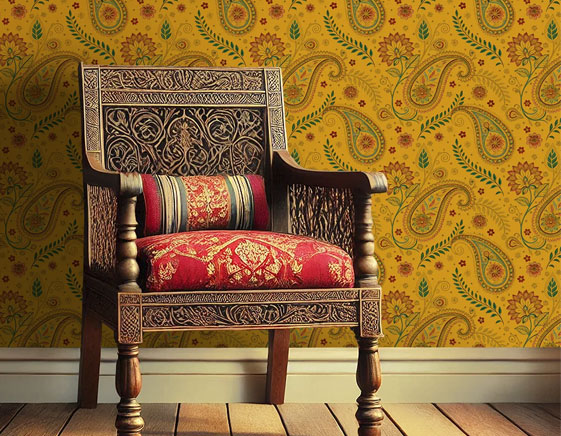
From Walls to Wonder: How Traditional Indian Art Is Redefining Modern Interiors
-

- Post Date: 24 Dec, 2025

From Walls to Wonder: How Traditional Indian Art Is Redefining Modern Interiors
People rarely say, “I want a traditional Indian wallpaper.”
They say something more practical, and more honest:
“My home looks good, but it doesn’t feel like me yet.”
That gap is where traditional Indian art is making a comeback. Not as loud nostalgia. Not as heavy décor. More like a quiet decision: one wall that brings warmth, rhythm, and identity into a modern layout.
A room can be beautifully furnished and still feel anonymous. Traditional Indian wallpapers cleanly solve that problem as they add character without adding clutter. Walls stop being background. They become the atmosphere.
If you are exploring this shift, start here: one feature wall, one mood, one clear intention. In most homes, that is all it takes.
Why traditional Indian art feels modern again
For a long time, “modern” meant neutral surfaces and minimal expression. It still works—but many homes now want something softer: a sense of place.
Traditional Indian aesthetics bring three things modern rooms often miss:
- Rhythm: patterns that feel structured, not random
- Meaning: motifs that carry culture, nature, architecture, celebration, and stillness
- Warmth: the room feels lived-in, not staged
The modern difference is restraint. Heritage looks best today when it is edited, one wall that anchors the room, not a room that competes with itself.
Why wallpaper has become the easiest way to bring heritage home
Paintings and objects are beautiful, but they don’t change the architecture of a space. Wallpaper does.
A heritage-led feature wall works because it:
- gives the room identity without taking up floor space
- creates depth even when furniture is simple
- stays consistent (it doesn’t become visual clutter over time)
A small but important truth: most feature walls aren’t perfect rectangles. There are TV units, glare, furniture textures, shelves, and daily life. Wallpaper still works because you can choose a design that has one job: calm, welcome, richness, or craft.
The Kalaakashi approach: heritage as moods, not labels
Most homeowners don’t choose wallpaper by theory. They choose it by feeling:
“I want my bedroom calmer.”
“I want my living room warmer.”
“I want my entry to feel Indian, but not too much.”
That’s why Kalaakashi’s Traditional Indian wallpapers are easier to navigate when you think in moods:
Bagicha: nature-led calm that doesn’t feel busy
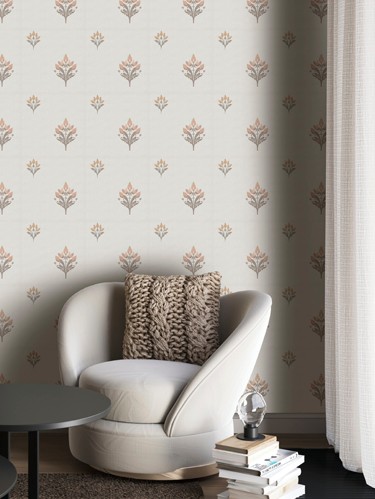
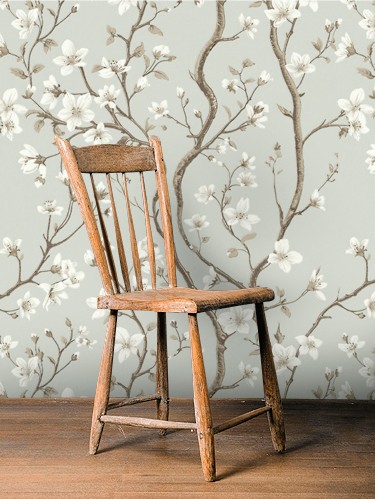
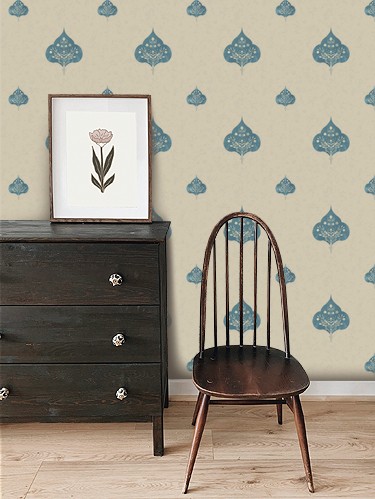
Bagicha works when you want softness, garden rhythm, airy ease, a wall that feels like quiet freshness rather than ornament.
Best for: bedrooms, reading corners, calm living rooms
How it lands best: warm neutrals, wood, linen textures; keep décor minimal.
Gulzar: floral richness with composure
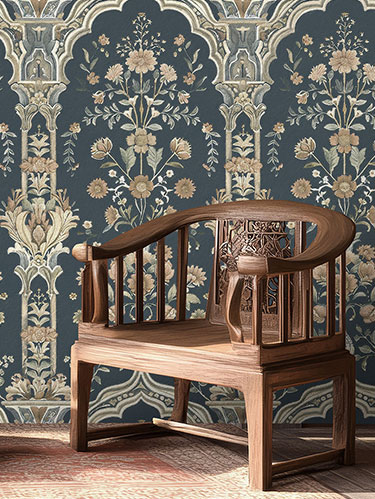
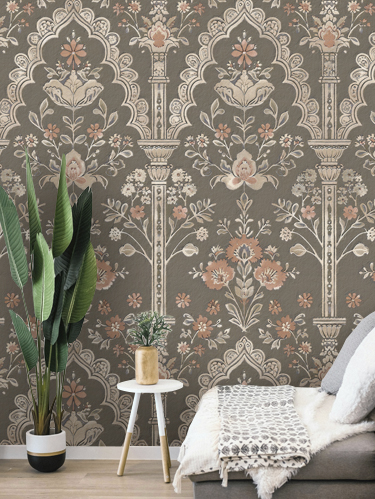
Gulzar carries the celebratory side of Indian aesthetics, rich, welcoming, alive—without needing to be loud if you use it with restraint.
Best for: living room feature walls, dining backdrops
How it lands best: one statement wall + warm lighting + quieter adjacent walls.
Toranam: the threshold idea – welcome, framing, culture
Toranam fits naturally into entryways and passages. It gives a foyer a sense of intention, as the home begins with a greeting.
Best for: foyers, corridors, transition spaces
How it lands best: pair with a simple console and mirror; let the wall do the cultural storytelling.
Modern Oasis: traditional influence with modern restraint
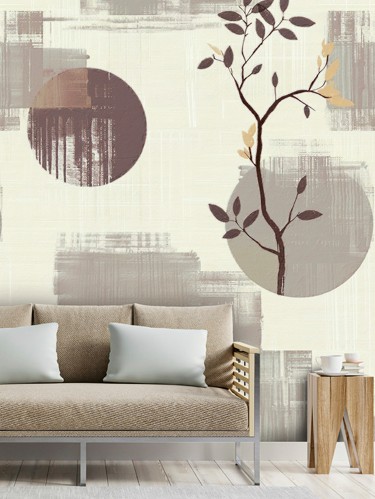
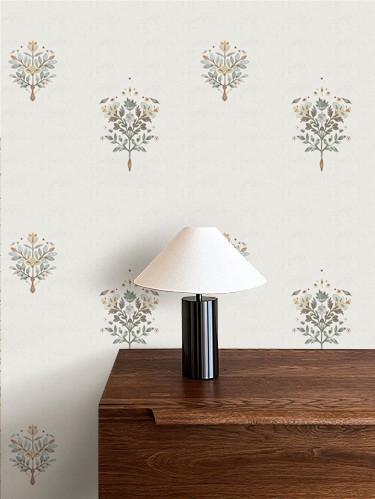
Modern Oasis is for contemporary layouts where you want the Indian element to feel refined, not dense.
Best for: modern apartments, minimalist living rooms, clean bedrooms. How it lands best: one wall only; let textures (not patterns) do the rest of the room.
Dhyana: stillness-led interiors for slower living
Dhyana belongs where calm spaces, bedrooms, pooja corners, and meditation zones.
Best for: spiritual corners, bedrooms, quiet zones
How it lands best: warm light, uncluttered surfaces, natural materials.
Bunai: craft-led detail that reveals itself over time
Bunai is for people who like crafted detail, patterns that don’t shout, but reward attention.
Best for: feature corners, boutique-style spaces, studio-like rooms
How it lands best: keep the surrounding décor restrained so the craft reads premium.
Room-by-room: a modern way to apply traditional Indian art
Living room
Choose one anchor wall (behind the sofa or TV unit) and keep the rest calm.
- Gulzar, if you want warmth and hosting energy
- Toranam, if you want a culturally rooted identity cue
- Modern Oasis, if you want refinement without ornament
Bedroom
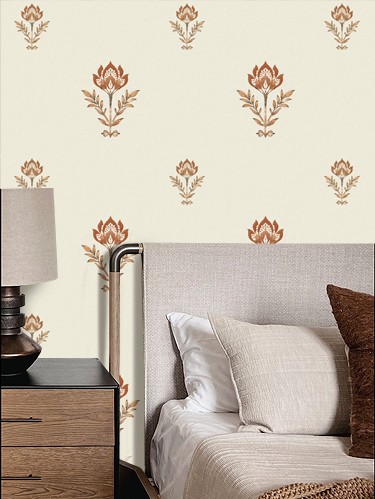
Use the headboard wall so the wallpaper has a clear role.
- Bagicha for airy calm
- Dhyana for stillness and balance
- Modern Oasis for minimal sophistication
Dining
Dining can hold richer walls because furniture breaks the surface.
- Gulzar for celebratory warmth
- Bunai for crafted richness that feels premium
Entry/foyer
This is where Indian design shines without becoming heavy.
- Toranam for a welcoming, culturally rooted threshold moment
Pooja corner/meditation zone
Traditional doesn’t need drama to feel spiritual.
- Dhyana for serenity-first walls
-
Bunai for subtle craft-led depth
-
What most people get wrong about “traditional.”
They assume traditional must be dense. It doesn’t.
A modern traditional wall is successful when:
- It has breathing room (negative space in the room, not necessarily in the pattern)
- It has one job (warmth, calm, welcome, craft—choose one)
- The furniture supports it with quiet lines
Traditional becomes modern the moment it is edited.
What to avoid (so it stays premium)
- Avoid covering all walls with dense motifs
- Avoid mixing multiple strong patterns in one room
- Avoid cool white lighting on heritage tones (it flattens depth)
- Avoid putting a busy motif behind open shelves (it turns into clutter)
- Avoid mismatch of scale (large repeats in tiny rooms can feel crowded)
A calm checklist before you decide
- If you want soft and airy → Bagicha
- If you want rich and welcoming → Gulzar
- If you want entryway identity → Toranam
- If you want refined restraint → Modern Oasis
- If you want stillness and balance → Dhyana
- If you want crafted detail → Bunai
Start with one wall. Let it carry the story. The room will follow.
FAQs
1) How is traditional Indian art redefining modern interiors?
By bringing identity and meaning back into modern spaces – through motifs, rhythm, and curated feature walls instead of heavy décor.
2) What is the simplest way to use traditional wallpaper in a modern home?
Use one feature wall. Keep furniture clean-lined and surrounding walls quiet.
3) Which Kalaakashi names suit calm interiors?
Bagicha, Dhyana, and Modern Oasis are aligned to quieter, modern-friendly moods.
4) I want a royal look but not a heavy room. What should I do?
Choose one statement wall (e.g., Mor-Payeh / Darbar / Rajdwar vocabulary) and keep lighting warm and décor minimal
Closing
if your home is modern in layout but Indian in spirit, a traditional wall is one of the most elegant ways to bridge both worlds. Start with one wall. Choose the mood you want the room to carry. Let the space feel authored—calm, rooted, and unmistakably yours.
Explore Kalaakashi Traditional Indian Wallpapers and the collections Bagicha, Gulzar, Toranam, Modern Oasis, Dhyana, and Bunai to find the wall that fits your home’s mood.
Editorial Desk — Kalaakshi
Kalaakashi publishes design-led articles to help you choose traditional Indian wallpapers with clarity—spanning heritage motifs, room styling, placement guidance, and finish selection. Editorial & SEO support: Content operations and SEO structuring are supported by GB Digital Hub (Digital Growth Consulting).


How to Choose the Perfect Traditional Wallpaper for Your Home
Every Wall Has a Role A wall is more than a boundary—it sets the tone for the entire room. Choosing the right traditional wallpaper is …
-
- Post Date: 29 Sep, 2025

Why Indian Wallpapers Are the Future of Luxury Interior Design
Redefining Luxury In the past, luxury in interiors was defined by imported brands, high-gloss finishes, or rare materials. Today, luxury is being redefined. It …
-
- Post Date: 29 Sep, 2025

From Palaces to Living Rooms: The Journey of Heritage Wallpapers
A Royal Beginning Centuries ago, Indian palaces were more than architectural wonders—they were living museums of art. Their walls spoke through painted frescoes, floral …
-
- Post Date: 29 Sep, 2025

The Timeless Beauty of Indian Traditional Wallpapers in Modern Homes
When Walls Tell Stories In every home, walls carry more than structure—they carry identity. A plain wall may feel minimal, but a wall dressed in …
-
- Post Date: 29 Sep, 2025

Walls That Remember, Walls That Reflect: Why Indian Traditional Wallpapers Belong in Every Home
Because a Wall is Never Just a Wall Newlyweds: Start with Roots A wall has heard your dreams. It has seen your late-night work calls. It has stood …
-
- Post Date: 20 Jul, 2025

How to Style Your Pooja Room with Traditional Wallpapers: A Sacred Symphony of Art & Spirit
Introduction Your pooja room is not just a corner—it’s your home’s spiritual heart. A space of calm, energy, and devotion. At Kalaakashi, we believe every …
-
- Post Date: 24 Jun, 2025